

























President Donald Trump is known for having disagreements with big media, and his recent attempts to take action against several news organizations drew attention to this and created conflict between the White House and six individual citizens who filed a federal lawsuit against Trump’s administration. There are six citizens that filed the lawsuit which are Kenneth Roth (a human rights advocate), Beverly Gage (a history professor), Peter Schmidt-Nowara (a high school civics teacher), Ethan Young (a student journalist), Daniel Froomkin (an independent political journalist), and Benjamin Wittes (an Editor in Chief of Lawfare).
The decision caused concerns about freedom of the press and the First Amendment, which protects freedom of speech and the press. Critics argue that the government should not punish news organizations for publishing stories that criticize the president.
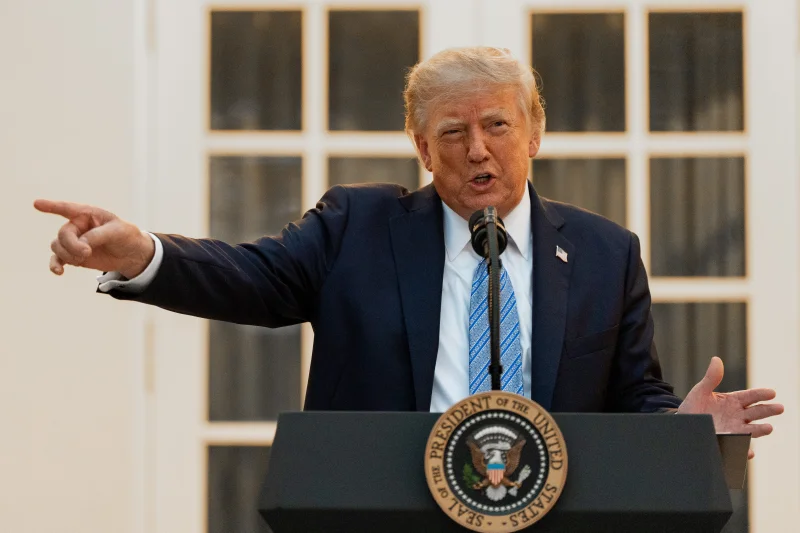
On September 18, 2026, Trump announced that the news organizations CNN, MS NOW, and Politico would be banned from accessing the White House. He criticized these networks for their reporting on him and his administration, claiming that they were spreading false information about him.
This decision raised concerns among the public about whether reporters should be allowed to cover the president even when their reporting is critical. However, a free press is necessary for democracy because it allows citizens to hear different viewpoints and hold government leaders responsible and accountable.
These situations brought up questions of the First Amendment, which protects freedom of speech and freedom of the press. In theory, this means that the government is not allowed to silence news organizations and journalists simply because they do not like what is being said. However, there are also rules that organizations must comply with, and not all are given access to certain government events.
The news organizations challenged the restrictions in court, arguing that they were being treated unfairly because of their reporting. They asked for immediate help because they were losing access every day. A federal judge ordered their access to be restored. The judge issued a temporary restraining order or an injunction which forces things to go back to normal right away so that there is no more harm created while the case is being figured out. However, the legal case continued because the initial court order was only a temporary fix to the full legal battle.
The case also highlights the difference between a temporary court order and a final ruling. A temporary order protects the news organizations while the court reviews the situation, but the final decision will determine whether the administration’s actions violated their legal rights.
“The disagreements between Trump and the news media [show] how complicated it can be when the government and reporters do not agree,” Layla Dempsey, TL Sophomore, said. The overall lawsuit was about whether the administration broke constitutional laws by banning the reporters. For this to be a permanent injunction both sides still needed to present all of their deep legal arguments, exchange evidence, and have a final trial.
Another issue relating to Trump’s involvement in public media included ABC and its connected company, Disney. The Federal Communications Commission, also known as the FCC, is the government agency that regulates broadcasting in the United States. The FCC began reviewing the licenses of several ABC-owned television stations, sparking arguments about whether the government should be using its power to eliminate news that Trump does not like. Disney claimed that the review was connected to the network’s programming and news coverage, which the FCC denied, resulting in a legal battle. Other news sources such as Fox News have paused White House reporting due to this.
The Trump administration believes that they have reasons for making these decisions, but the news organizations argue some of the actions are unfair and make it harder for reporters to do their jobs. Both sides have different arguments, and the courts will have to decide if the rules were being followed or not.
Dempsey states that, “News programs are very important and crucial because they help people understand what is happening in our country and with the government,” Dempsey said, but news organizations argue that actions by the Trump Administration against them are unfair and make it harder for reporters to do their jobs. The administration has countered by claiming that they have reasons behind their decisions. This situation has raised questions about how much power a president should have over the media. Supporters of the administration argue that news organizations should be held responsible for inaccurate reporting.
So far, the courts have not made a final decision about Trump’s ban on CNN, MS NOW, and Politico. On September 24, a judge temporarily stopped Trump from banning the organizations from the White House, allowing them to return while the case continues. The case continues so the judge can make a lasting, final ruling on whether the government is permanently allowed to ban reporters or if doing so is unconstitutional. The final outcome could affect how reporters cover the president and how much control the government has over news organizations in the future.