



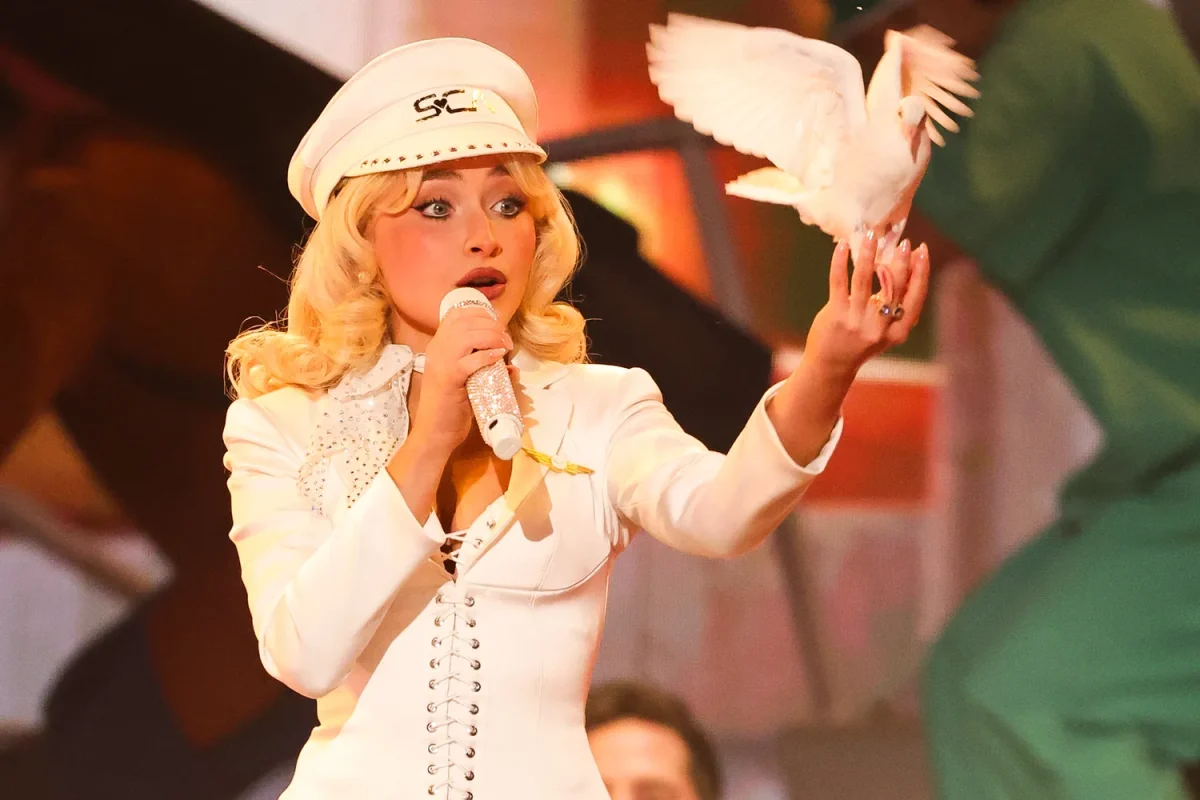









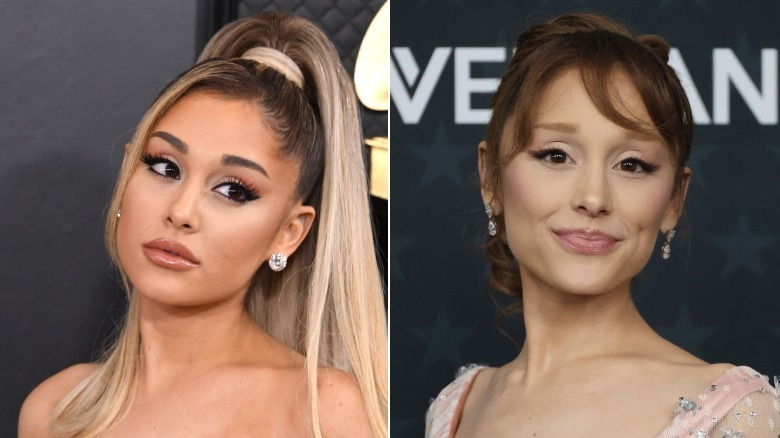
Ariana Grande; Widely considered one of the most influential and talented pop stars of the 21st century. Recently, all eyes have been on Grande as she kicked off her Eternal Sunshine tour, but not for the reason many might think. Grande’s appearance on the Eternal Sunshine tour quickly became a topic of discussion online, with fans and commentators focusing on how much thinner she appeared than in previous years.
Across social media, influencers compared her to skeletons, dietitians claimed to spot signs of malnutrition, and concerned fans began to call out her team. I, for one, was concerned not just for Grande, but also for the message she had spread to younger fans. A mom of a seven-year-old commented on a post that she had to block “all things Ariana” on her child’s devices because her daughter had told her she wanted to be “as skinny as her”.
As someone who has followed Ariana through her music career for around a decade, I recognized this pattern of drastic change. This wasn’t a standalone incident, a new look, or a misunderstanding. Video essayists, Reddit forums, and commentators like Scandalous Media have used terms such as “narcissistic collapse” to explain Grande’s changing public image.
Ariana Grande’s public image and personal life shifted after her divorce from Dalton Gomez, who moved on quietly without adding additional public drama, a contrast in typical celebrity break ups. Ariana’s usual sense of control and narrative appeared to have changed because of this, affecting her public presentation, defensiveness, and views of her past relationship patterns. Taken together, these changes have fueled the belief that Ariana repeatedly reinvents herself in response to different stages of her life and career.
Celebrities are known to have eras. For instance, Beyoncé recently explored country in her music production. But overall, Queen B (a common nickname for the singer) stayed true to herself and didn’t permanently change her identity. Grande, however, has constantly changed throughout her career. She never had “eras”, but rather extreme changes in her identity. During and after Wicked, fans also noticed changes in Grande’s appearance, voice, makeup, and public mannerisms. Her voice got lighter, her character became more dainty, and her makeup got softer, a complete change from her purposefully confident, seductive, and grounded look during her “positions” era. But this hasn’t been the only time she’s changed her identity completely. Before exploring that, however, it’s important to understand some context.
Ariana Grande first began her career performing in local South Florida before getting her first major role on Broadway at 15. In 2008, she earned the role of Charlotte in the Broadway musical 13, earning a National Youth Theatre Association Award. Grande then got the role of Cat Valentine for the tv show Victorious, which young Nickelodeon fans adored for her childish, naive, and optimistic character. Cat’s popularity seemed to ultimately influence how she presented herself.
When the show ended, Grande released a goodbye statement, writing, “When I was younger, people loved Cat so much that I used to pretend to be more like her. It took me a long time to be brave enough to separate myself and show people how different we actually are.” Once her music career began after the show, her popularity exploded. But after allegations began to surface, her first huge identity shift began. She was accused of forcing people to delete bad pictures, only wanting to be photographed from a certain angle, and needing her team to carry her when she was too tired.
And of course, as many loyal fans remember, there was the notorious donut incident in 2015 where she licked multiple donuts in a store and then said, “I hate Americans.”
Because this scandal was so huge that it nearly ruined her career. Grande couldn’t really live up to what one influencer quoted as “the perfect little pop princess” she was seen as at the time.
And thus, her “Dangerous Woman” era was born, where Ariana emerged as darker, more mature, and with new, more explicit music. The sheer contrast between her tone in her first studio albums, “Yours Truly” and “My Everything,” was tangible, and fans noticed how she actually began to lean into the pop diva accusations. This essentially marked the start of her constant reinvention. If you told me that Ariana Grande from 2015 was a completely different person in 2016, I’d believe you.
This happened again just two years later, when fans began to call her out because of her extreme tan, noticeable voice change and overall shift in demeanor. Ariana Grande began to conform to the aesthetics, looks, and traditions of African American culture. And this incident wasn’t the only instance of Ariana going through a change like this. Later, a video surfaced of Grande talking to a fan in Japanese, fans once again began to call out this pattern of identity reinvention. Major publications like The Atlantic and The Independent formally criticized her for using other cultures “as a costume”. Writers exemplified her fake tan to drastically darken her skin tone, her adoption of African American Vernacular English, and her use of trap music as instances of appropriation.
After a few more years, her sixth studio album “positions” was released, and some fans and media coverage described Grande as appearing more settled and comfortable in her public image. She was in a new, healthy relationship and appeared more happy in her public life. And then the production of Wicked started.
Once the movie was released, fans, including me, were in complete shock at her appearance. As previously mentioned, she looked incredibly different: paler, more petite, and softer-looking than she’d been just a year earlier. After the movie, it still seemed like Ariana stayed deeply immersed in her Wicked character, Glinda. Sound familiar? Her adjustment seemed disturbingly similar to how Grande became deeply immersed in Cat Valentine just a decade earlier. Grande and Cynthia Erivo also drew attention for the intensity of their friendship and emotional interviews during the Wicked press tour.
In interviews about the movie, the two were constantly crying, holding hands, and having strong emotional outbursts that seemed to tie into some intense on-set production. Their emotional interviews, combined with public discussion of both performers’ appearances, fueled online speculation about the pressures surrounding the production. Grande responded to criticism of her appearance by saying she was “the healthiest [she’s] ever been,” directly challenging assumptions that viewers could judge her health by looking at her.
Grande’s relationships have also been a hot topic in the public eye. Not because she seems happy or healthy, but because of a repeating pattern within them. In 2013, Jai Brooks, Grande’s boyfriend, accused her of cheating on him with another man named Nathan Sykes, who was also in a relationship at the time. Naya Rivera, while engaged to Big Sean, said she’d found Ariana at the couple’s house.
Then, Grande began dating Pete Davidson just a day after he’d broken up with his girlfriend. A few years later, Grande married Dalton Gomez, until she divorced him and was seen dating costar Ethan Slater from the set of Wicked just a short time later, who was also married and had a child of his own. Grande’s relationships have also fueled tabloid criticism, including the recurring “homewrecker” label.
And now, approaching the present, things seem more uncertain than ever for this generational popstar. In one of her new music videos following the release of her new album “petal”, In the music video for “petal,” Grande’s appearance again became a major topic of online discussion.
To be frank, not only does she appear to reciprocate her own demeaning thoughts about her image, but the video itself also engages with criticism of Grande’s body, including a scene in which a Hollywood director tells her she could “lose a few pounds.” And the thing the artist appears to have done with her image is quite clever too. Her embodiment of delicacy has made any criticism, feedback, or concern seem cruel, whether it’s worry for her health, questions about her history, or anything else that isn’t directly positive. Some fans see criticism as body shaming, while others say that shuts down discussion about celebrity body standards.
And with Grande’s sold-out tour, it’s more important than ever to question the kind of image she’s promoting to millions of her young fans online. But let me make it clear once again: this isn’t a standalone incident. The extremely skinny physique has made a comeback over the past couple of years, making it even more difficult to criticize an image that is glamorized and rewarded.