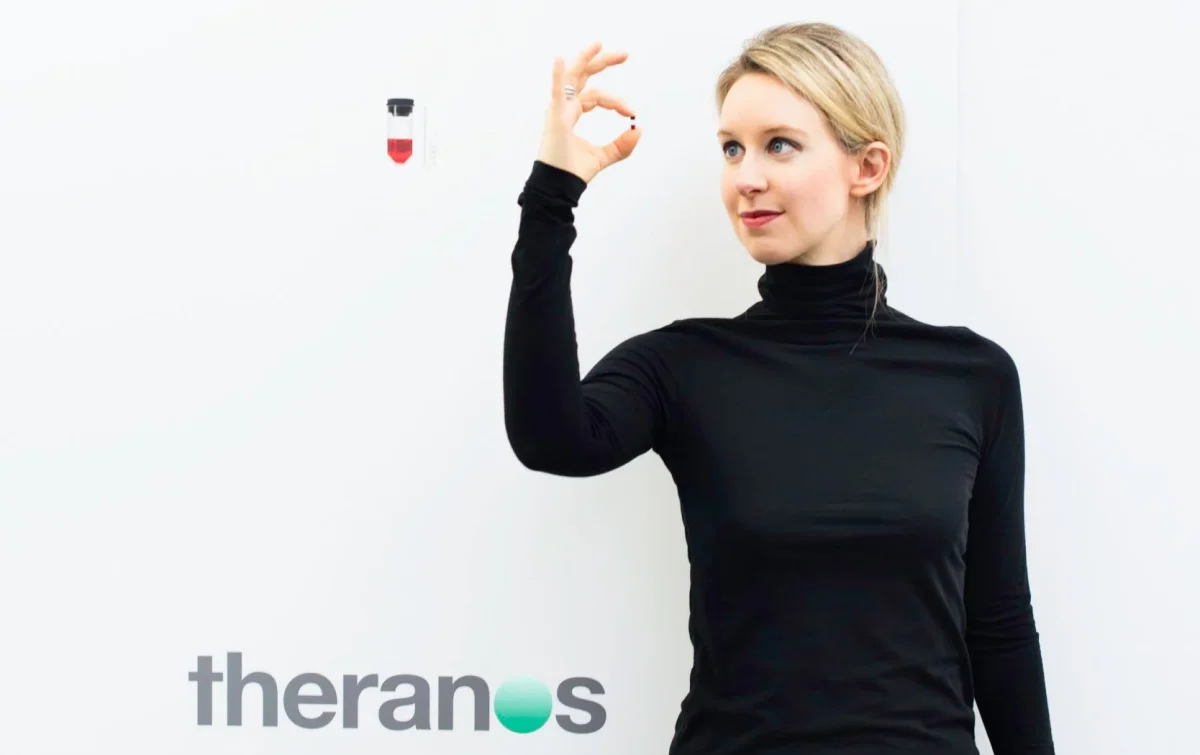

























On October 16, 2026, Nathan Fielder and Lance Oppenheim’s new documentary You Can See Everything was released in theaters across the United States. Produced by A24, a studio known for its bold and unconventional films, the documentary adds an unsettling twist to the story of Elizabeth Holmes, a businesswoman convicted of fraud through her health-tech company, Theranos. Just weeks before she was set to serve her 11 ¼ year sentence, Elizabeth and her partner Billy Evans invited the crew into their home to document the story of her crime in person. This is an extremely rare situation in the world of documentary filmmaking where a crew is able to capture the inside life of a criminal before their sentence. But who is Elizabeth Holmes? And what exactly did she do wrong?
Holmes was born in Washington, D.C., in 1984. Her father was the vice president of the Clean Energy Group branch of Enron, an American energy company that was later found guilty of accounting fraud and obstruction of information. Her mother was a congressional committee staffer. In 2002, Holmes went to Stanford to study chemical engineering, though she dropped out in 2003 after reporting that she was raped as a freshman. She used her tuition money from dropping out to found a startup called Real-Time Cures.
Once Real-Time Cures became operational, Holmes came up with a proposal for a blood test that only required a few droplets of blood. American pharmacologist Phyllis Gardner responded doubtfully, saying that it was “practically impossible,” but that Holmes was going to “follow her model until it succeeded.” Even after Gardner’s negative response, Holmes convinced the dean of Stanford’s School of Engineering, Channing Robertson—who would later become the company’s first board member—to approve and back her idea. Holmes renamed the company Theranos and became president with her then boyfriend, Sunny Balwani, whom she had met while studying abroad in Beijing when she was 18 and he was 37. By late 2004, Holmes had raised $6 million to fund the company.
Holmes initially took careful measures to keep Theranos relatively free of the press; the company did not even have an official website. But in September of 2013, Theranos established a partnership with Walgreens. In stores across the country, Walgreens set up blood sample collection centers. This partnership attracted major media attention, garnering Elizabeth Holmes coverage in prestigious business magazines such as Fortune and Forbes. At this time, Holmes was found to have a net worth of $9 billion, including Theranos. The company had raised more than $400 million in venture capital, establishing itself as one of the fastest-rising health technology companies in the world.
Though on paper the company seemed to be making marvelous advancements, suspicions started to rise over its actual validity. In late 2015, The Wall Street Journal reporter John Carreyrou claimed that Theranos was using regular blood testing machines and not their patented “Edison Machines.” Theranos tried to deny the claims, but several organizations grew suspicious. After failing several FDA inspections, Theranos pulled several tests from their services. Federal agencies took notice of the company’s activities, and soon, the company was under criminal investigation by federal prosecutors and the United States Securities and Exchange Commission.
After suffering several financial blows, Theranos found itself in an extremely fragile state. In April 2018, as a result of near-bankruptcy, the board laid off most of its more than 800 workers, leaving just 25 people to keep the company running. Finally, on September 4, 2018, Theranos shut down, and its investors were left with no money. The estimated equity loss is projected to be between $700-$900 million.
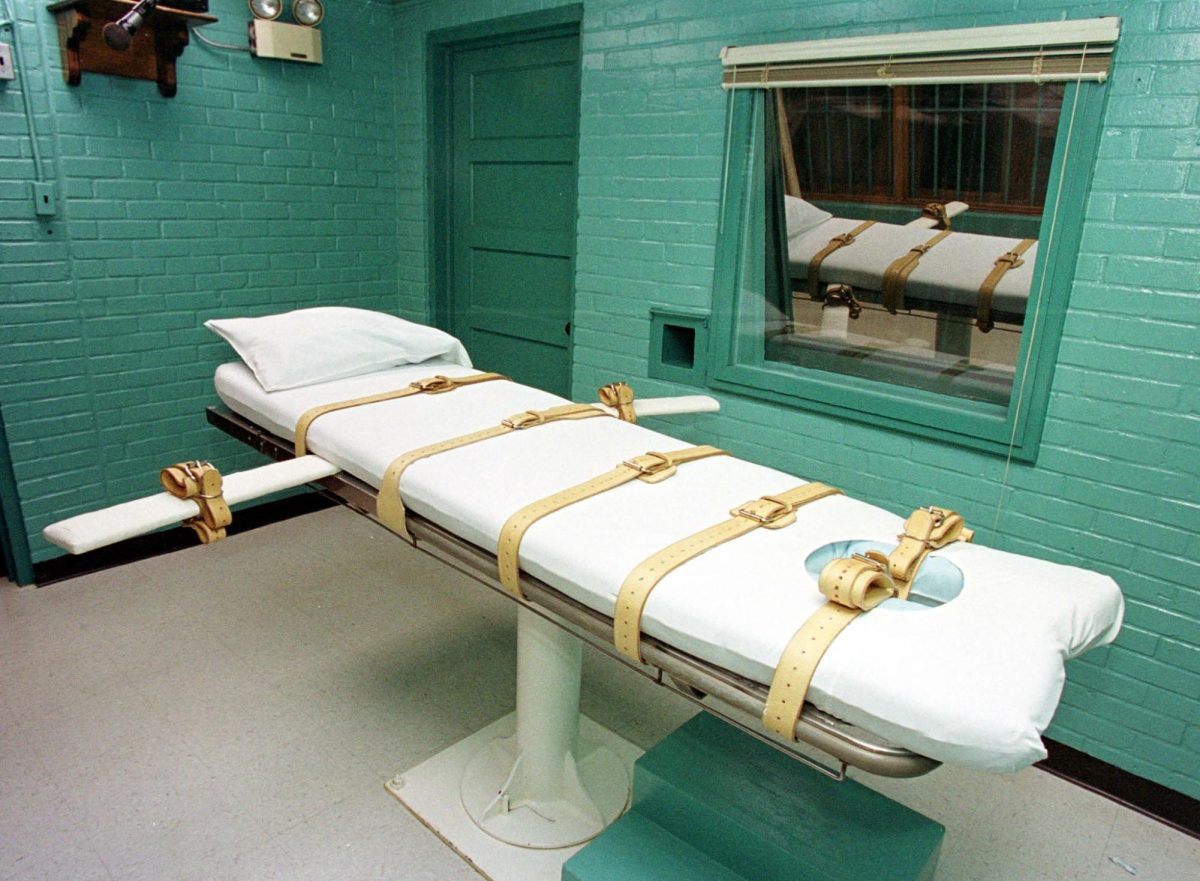
On January 3, 2022, Elizabeth Holmes and her COO, Sunny Balwani, were found guilty by a federal jury in San Jose, California. She was found guilty on one count of conspiracy to commit wire fraud and three counts of wire fraud. Holmes was sentenced to 11 years and 3 months in federal prison, and she and Balwani were ordered to pay $452 million in restitution to the investors. Holmes went to federal prison in Bryan, Texas, on May 30, 2023.
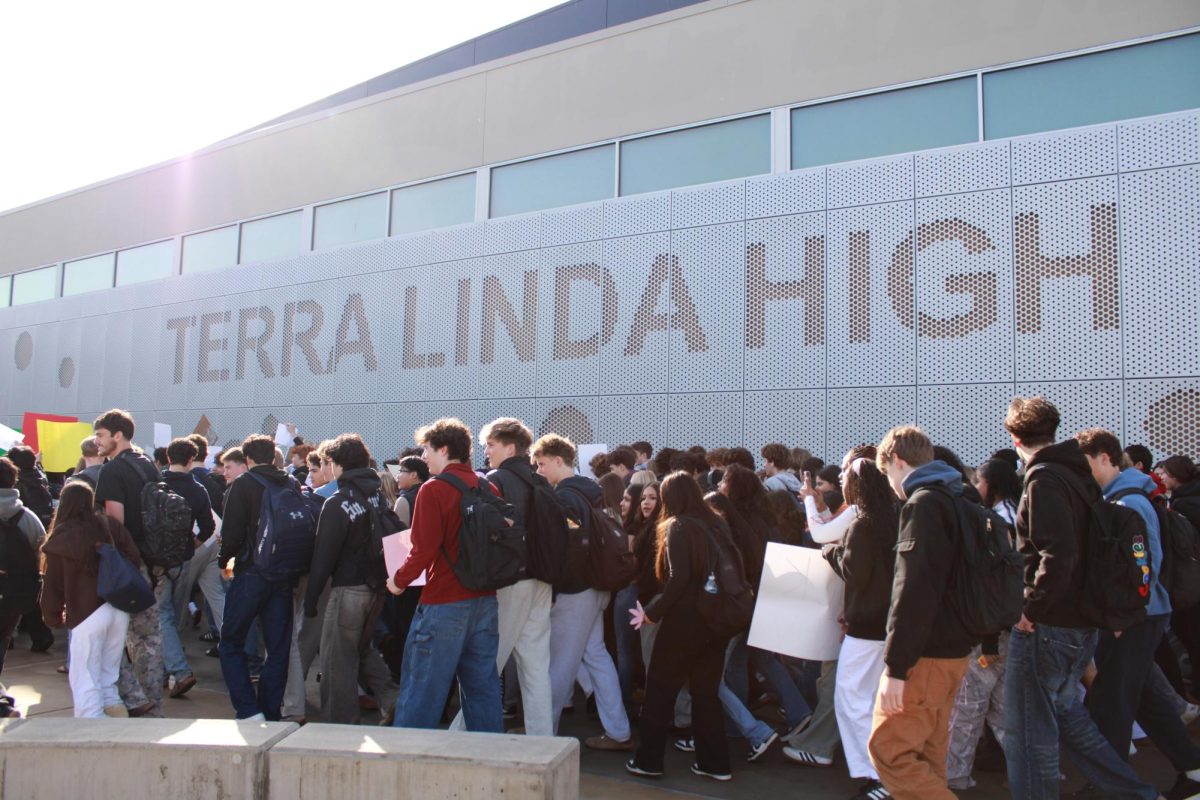
Despite her final prison sentence, the consequences of Holmes’ fraud have remained. “I can’t believe how she was able to hurt so many people and keep going,” Terra Linda High School junior Sonia Carroll said, describing Holmes as one of the most greedy and manipulative businesswomen to come out of Silicon Valley.
After being found guilty of one of the biggest frauds in this day and age, Holmes is in prison to serve her sentence. Filmmakers Lance Oppenheim and Nathan Fielder have brought her story to the big screen across the country. Fielder adds extreme transparency to the documentary and provides a clear view into Holmes’s life and family both before and after her prison sentence. You Can See Everything (2026) shows the direct influence that Holmes has on the people around her and the circumstances that led to her imprisonment. Holmes personally tells the story of her billion-dollar fraud and attempts to argue her innocence in front of a national audience. Will you be tuning in?