
































The California governor seat is up for election in 2026, and so far there are many contenders in the race but no clear frontrunner. As California has the largest population of the U.S. states and the fifth largest economy in the world, being its governor is closer to being the leader of a separate country than that of a U.S. state.
The California Constitution prevents a governor from holding the position for more than two four-year terms, so current California governor Gavin Newsom—who was first elected to the position in 2018, and then reelected in 2022—cannot run again. There is speculation that Newsom is planning a run for the presidency in 2028. This path, from California governor to U.S. president, has been pursued by many former governors, but only Ronald Reagan has successfully served in both positions.
This year’s election is especially important, as California is a predominantly Democratic state, meaning the majority of Californians are at odds with current Republican President Donald Trump. A Democratic governor could serve as a main government counterweight against Trump, acting as a leader of anti-MAGA sentiment, not just in California but nationwide.
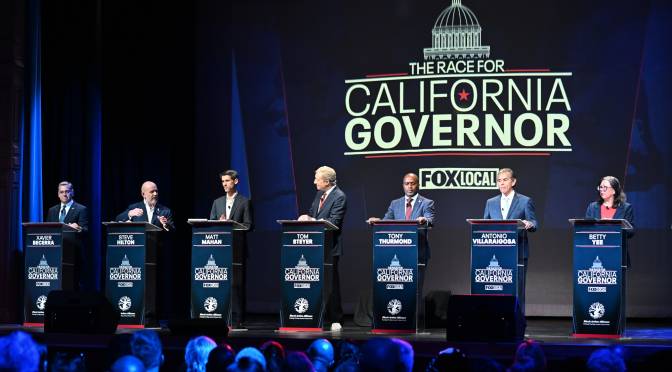
But although California typically leans left politically, there has been speculation that a Republican candidate could win this year’s gubernatorial election. Eight Democratic candidates have formally entered the primary, and California’s top-two primary system does not ensure that one candidate from each major party moves on to the general election. The Democratic party could be shut out of the general election if two Republicans clinch the top two spots in the primary because the Democratic vote is split between so many different candidates.
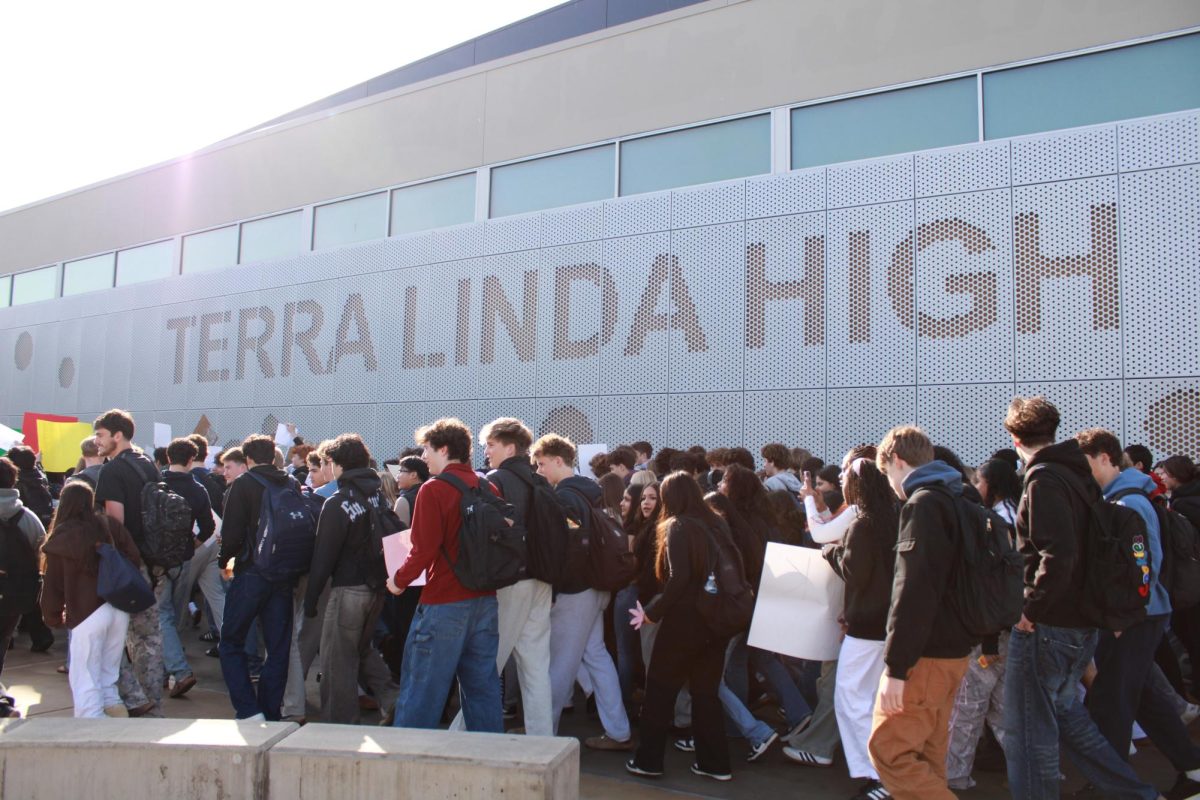
“People tend to vote along party lines,” said TL junior Abby Lauster, who will be a first-time voter in the 2026 election. But this year, with so many candidates in a single party, partisan voting could be heavily fragmented, threatening the Democratic dominance in the California governorship that has been held since 2010.
A recent poll from Politico and the UC Berkeley Citrin Center shows Steve Hilton, Republican and former contributor to the conservative media outlet Fox News, in the lead with 19% of likely voters. Hilton was born in England and previously served as strategy director for former UK Prime Minister David Cameron. Following Hilton, Democrat and billionaire Tom Steyer polls in second, with 13% of likely voters.
However, a different poll from Emerson College shows Congressman Eric Swalwell, current U.S. representative of California’s 14th congressional district, in the lead, with support from 17% of likely voters and 27% of Democratic voters. This poll showed Hilton in second, with 13% of support.
The lack of consensus or common trends among different polls further highlights the division among the state population over the future governor. The California Democratic Party is split over the issue as well. The party has not officially endorsed anyone after a state convention in February in which none of the candidates garnered the necessary 60% of votes from delegates.
Following the convention, Rusty Hicks, chairman of the state Democratic Party, addressed the party division in an open letter to the candidates, calling on the lowest-polling contenders to drop out of the race. “If you do not have a viable path to make it to the General Election, do not file to place your name on the ballot for the Primary Election,” Hicks wrote in the letter. Governor Newsom and Robert Rivas, Democratic speaker of the California State Assembly, seconded Hicks’ call.
No candidates dropped out in response, and one candidate, Tony Thurmond, accused Hicks of targeting candidates of color, as the top contenders in recent polls are all white. Hicks’ plea also generated conflict among the Democratic candidates. One candidate, Antonio Villaraigosa, called on another candidate, Xavier Becerra, to drop out, claiming that if he did the chances of Democrats being shut out of the general election would decrease. Becerra responded on social media by pointing out that Villaraigosa has never won a statewide election.
However, the high number of candidates could have some positive outcomes. Many California Democrats are hoping that the abundance of contenders from a single party will push candidates to take more extreme stances on issues in order to distinguish themselves from fellow party members, who likely share similar baseline views.
“A lot of people agree on the biggest issues we’re facing right now,” said Lauster. “I think the question is, do I agree with how they plan to fix it?”