



















































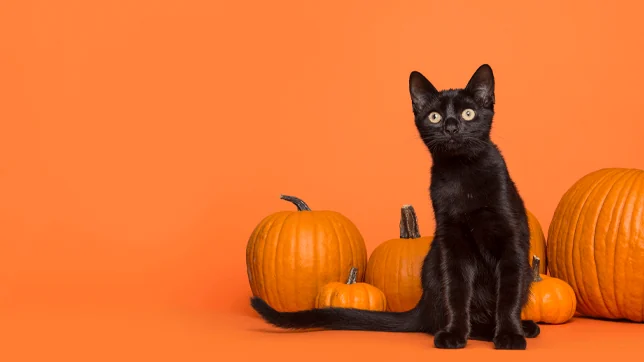
Every October, black cats appear as a symbol of Halloween on decorations, costumes, and the overall fall aesthetic. Their dark coat has connected them to mystery and mysticism for centuries. But behind this symbol is a much older superstition: the belief that black cats bring bad luck and are connected to witches.
This belief can have real consequences for the animals. Although black cats scientifically have nothing to do with bad luck, the myth surrounding them continues to influence how people perceive them. And even though these kinds of superstitions do not have evidence behind them, they still affect the treatment of animals today.
Black cats have been symbolic for hundreds of years throughout history. Historians can trace the first instances of symbolism regarding these creatures to Egypt, where cats were ingrained in religion and associated with the goddess Bastet, who represented protection and fertility. Cats in ancient Egypt were sacred and often worshipped.
However, in medieval Europe, religions like Christianity linked cats, especially black ones, to witchcraft and the Devil. It was through this that Black cats became associated with witches, with many people assuming them to be their companions or helpers. Over time, these stories eventually convoluted into the image of black cats being seen as a bad omen or a sign of misfortune.
Yet even this reputation was never globally accepted. In Asian cultures such as China, cats were associated with good fortune. If you have ever seen a waving cat figurine in a store window, you’ll understand the connection; across the world, the cats themselves do not change, but the meaning people assign to them does. In general, a lot of the power of superstition comes from what people are taught to believe.
The same pattern appears on Halloween. Black cats have become symbols of the holiday, appearing alongside witches, ghosts, and haunted houses. But a certain claim circulates on social media every October: that black cats are often harmed or killed around Halloween.
This fear is widespread enough that animal welfare organizations and shelters regularly address it. Organizations often point out that there is an important difference between a rumor that circulates widely and an actual danger that studies have shown. Real evidence that black cats experience an increase in killings during Halloween does not exist. While that does not necessarily mean that individual cases of animal cruelty never happen, the statement that these shadowy felines are regularly slaughtered at this time of year is simply unsupported.
One real concern, though, involves the restriction of black cat adoptions during October. Some shelters have expressed concern that people might adopt cats for Halloween decorations, fall aesthetics, or the excitement of owning a seasonally themed pet, only to return or abandon them afterward when they realize they cannot actually maintain an animal, or do not want it. It is important to recognize that shelters usually act out of caution or based on their own experiences rather than a statistical citation or societal consensus.
Protecting animals from irresponsible owners should always be a priority, but spreading unverified claims about black cat abuse can also evoke unnecessary fear.
There is nothing wrong with enjoying black cats as part of Halloween imagery; the problem begins when a fictional reputation affects how the real animals are treated. Instead of judging these creatures by an old superstition, judging how responsibly they are cared for is a much more real concern. The modern fears around Halloween show how easily a repeated claim can become accepted as fact.
After all, the association between bad luck and black cats really tells us more about societal beliefs than these animals themselves.