



































President Donald Trump has had an ongoing record of posting controversial content on his social media platform, Truth Social, created after his ban from Twitter in 2021. Many have criticized Trump’s posts about extremely serious and sensitive topics, such as the ongoing war in Iran, for being superficial and childish. From waste-covered protesters to slurs and sins, here are 5 of Trump’s most controversial Truth Social posts.
Trump’s Christ Depiction
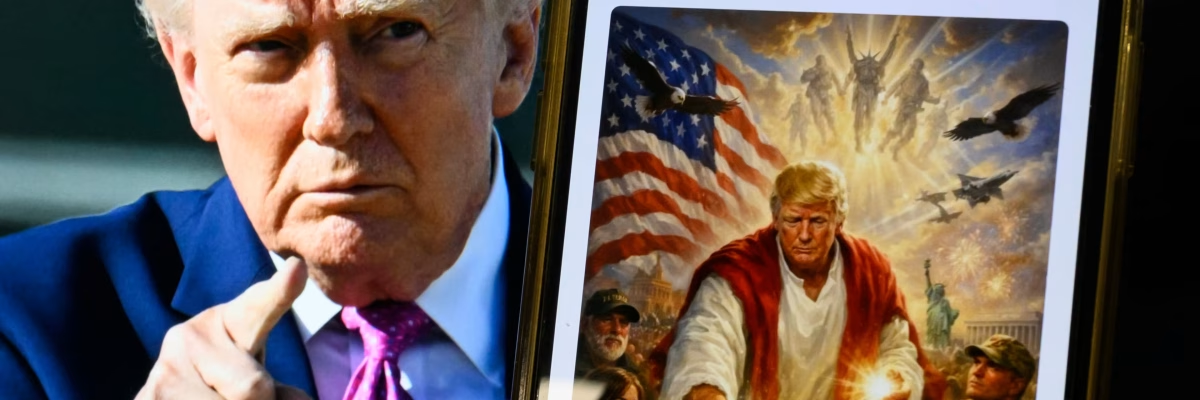
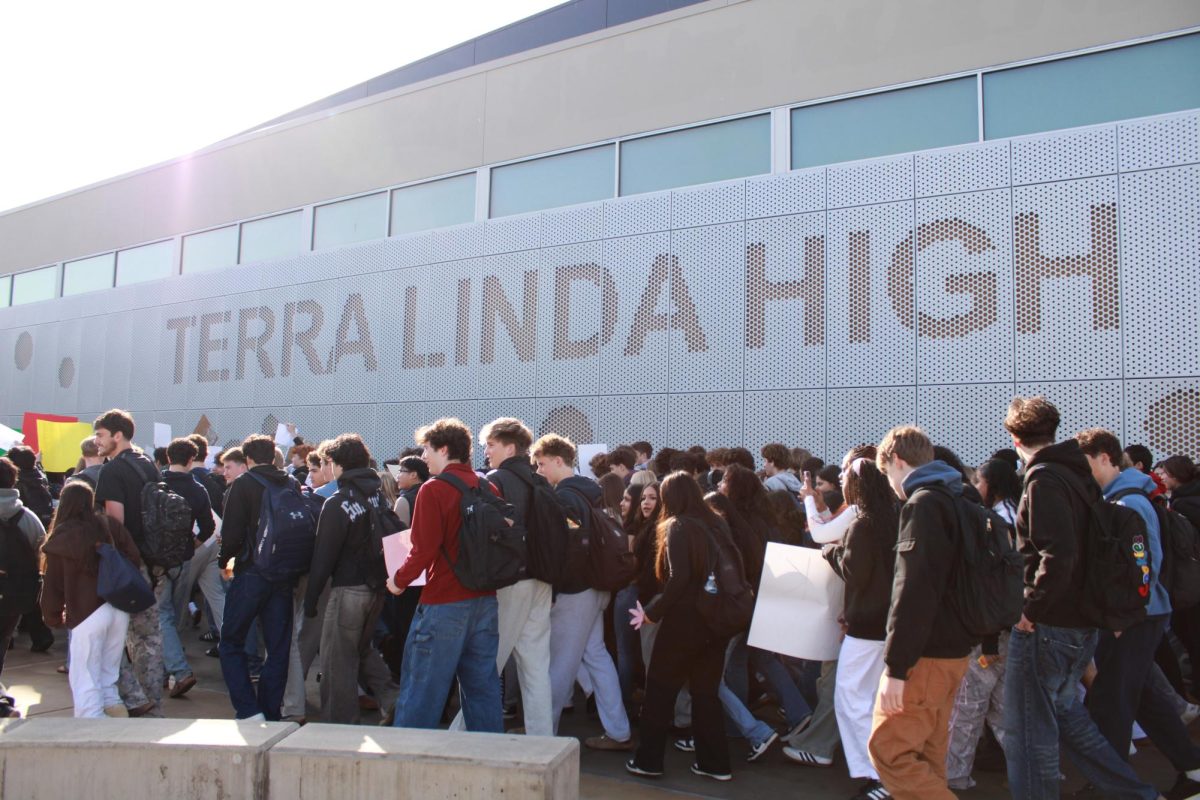
This instance occurred in April 2026, when the President shared an AI-generated image portraying himself as Jesus Christ. While several supporters found it symbolic, various Christian leaders, political opponents, and even members of MAGA criticized it as unacceptable and blasphemous. Tatiana Love, a Terra Linda sophomore and Christian, shared her perspective on the imagery. Love described the post as “blasphemy” and a “sin,” saying that Trump framing himself as Jesus contradicts the values of empathy and compassion found in the Bible. “In my opinion, I feel like the things that he embodies are nothing compared to what Jesus was and what he preached,” Love shared. In response to the backlash, Trump claimed he was actually posing as a doctor. Love claimed this explanation was a “defense mechanism” to avoid losing support from his religious following. “You can clearly see that he’s not a doctor,” she said. “If he was, it would be totally different, but with the light coming out of his hands and the clothing, it’s clear what his intentions were.” The White House eventually removed the post after the intense public backlash.
Barack and Michelle Obama as apes
In February 2026, a video was posted on the President’s account depicting former President Barack Obama and former First Lady Michelle Obama as apes in a jungle. The clip used AI to attach their faces onto the animals, specifically monkeys, while music from “The Lion King” played. Both Democrats and Republicans, including Republican Senator Tim Scott, condemned the post as racist. Many argued that this was intentional by Trump and racially motivated. While the Trump administration ignored the outrage at first, a spokesperson later deleted it, claiming a staffer made the post in error.
Donald Trump’s AI fecal rain on protesters
The use of AI-generated videos to address political opposition is another factor in the current debate over Trump’s social media posts. In response to the “No Kings” protests in October 2025, the President posted a video of himself flying a fighter jet labeled “KING TRUMP” and releasing brown sludge, resembling feces, onto protestors below. Protesters criticized this as an authoritarian attempt by the Trump administration to limit protests. Love noted that while Trump might have the right to express himself, “freedom of speech doesn’t always make what you do morally correct.” The video spread widely across platforms like X and TikTok, sparking more debates about how ethical it is to use AI-generated videos to mock political opposition.
Trump’s use of the R-slur
The language used by those in office to describe rivals also remains a significant point in debates about Trump’s digital responsibility. Following the 2024 election, President Trump used a slur to describe Minnesota Governor Tim Walz in a Thanksgiving post. He referred to Walz as “r*****ed” while criticizing his policies regarding refugees. When questioned about the choice of words on Air Force One, the President stood by his claim, stating he believed there was “something wrong” with the governor. The post is still up today. Shortly after Trump’s post, a post featuring several people with Down syndrome advocating against the President’s use of the r-slur surfaced, gaining millions of views and hundreds of thousands of likes. As seen, the type of language used has led to concern around equity and respectful leadership in today’s age.

“No more Mr. Nice Guy!”
Most recently, in April 2026, Donald Trump posted an intense warning to the Iranian government during negotiations. The President shared an AI-generated image of himself holding an assault rifle in front of explosions with the caption, “No more Mr. Nice Guy!” By posting the image during this active international conflict, many argued that the President was terrorizing millions and disregarding the ceasefire with Iran. Moreover, human rights groups labeled similar rhetoric, specifically the threats to bomb Iranian infrastructure into the “Stone Age”, as a potential breaking of international law that endangers civilian lives.
Overall, many factors affect how the public views the President’s social media use. Some argue that direct communication allows Trump to speak to the people without things like media filters. Others say that his use of AI and slurs could actually worsen barriers to productive political debates or conversations. These differences show how social media rules and political conduct can play a large part in how national discussions take place in the future.


Gemma Graham • Sep 2, 2026 at 10:41 am
awesome article!!