



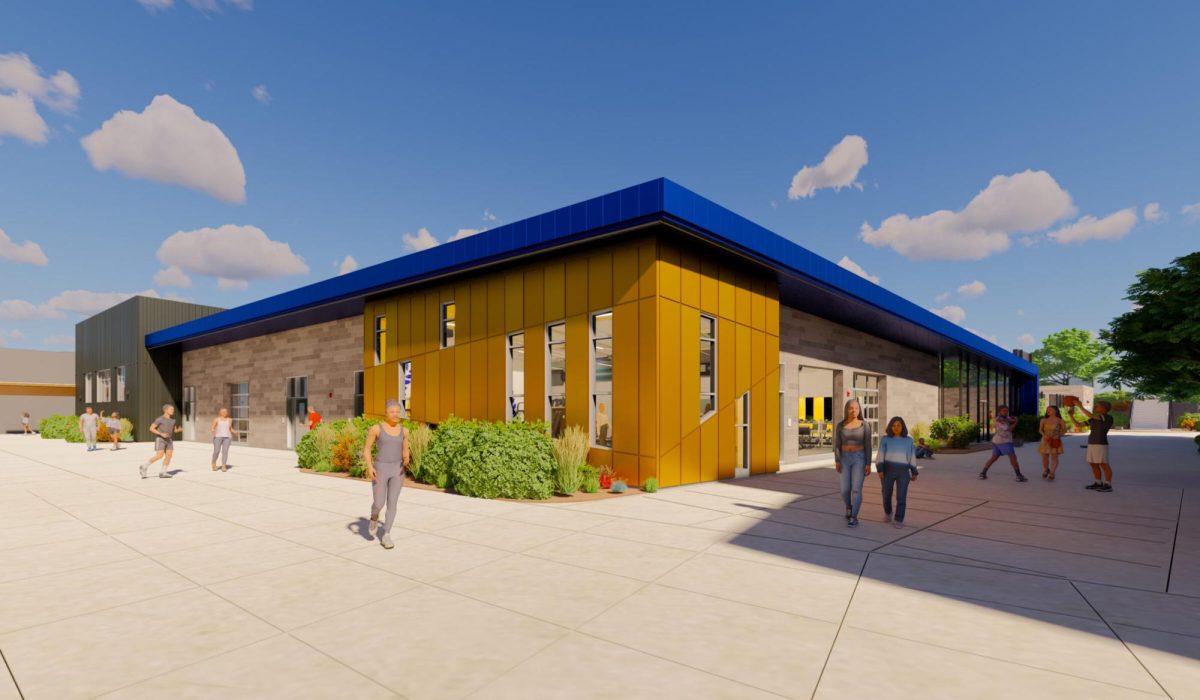
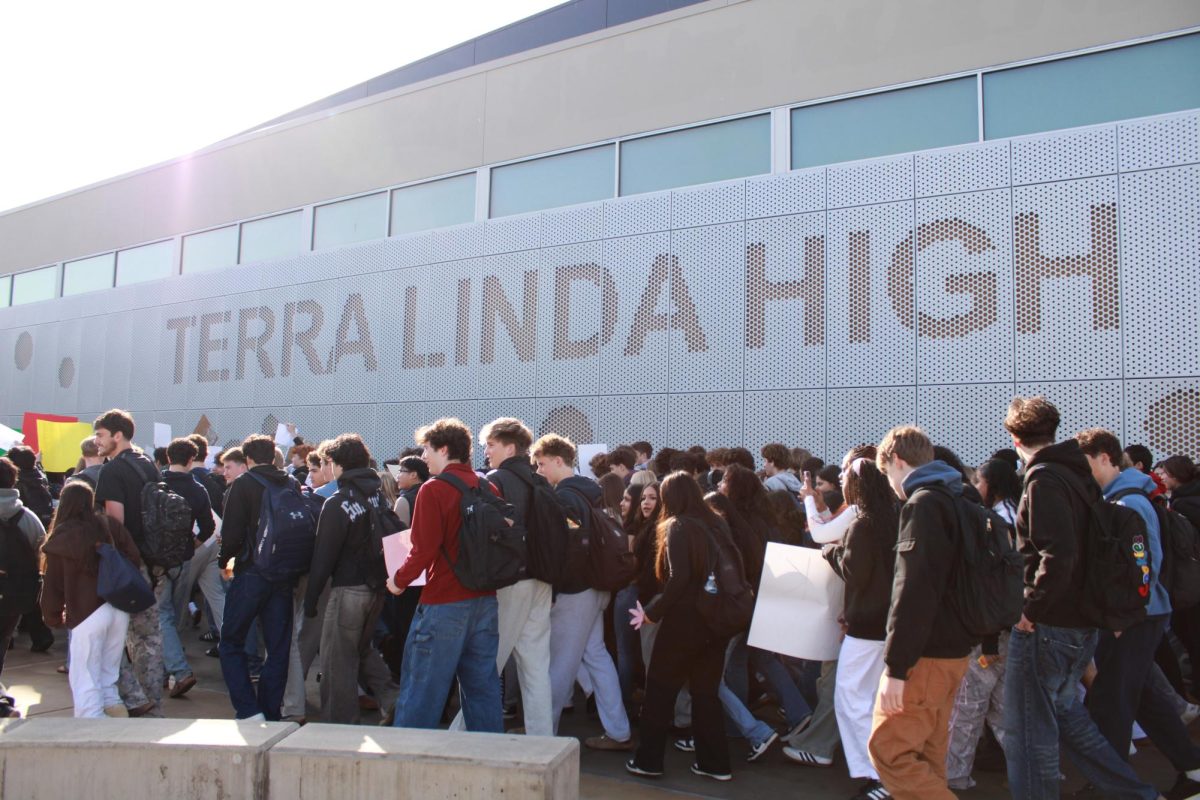






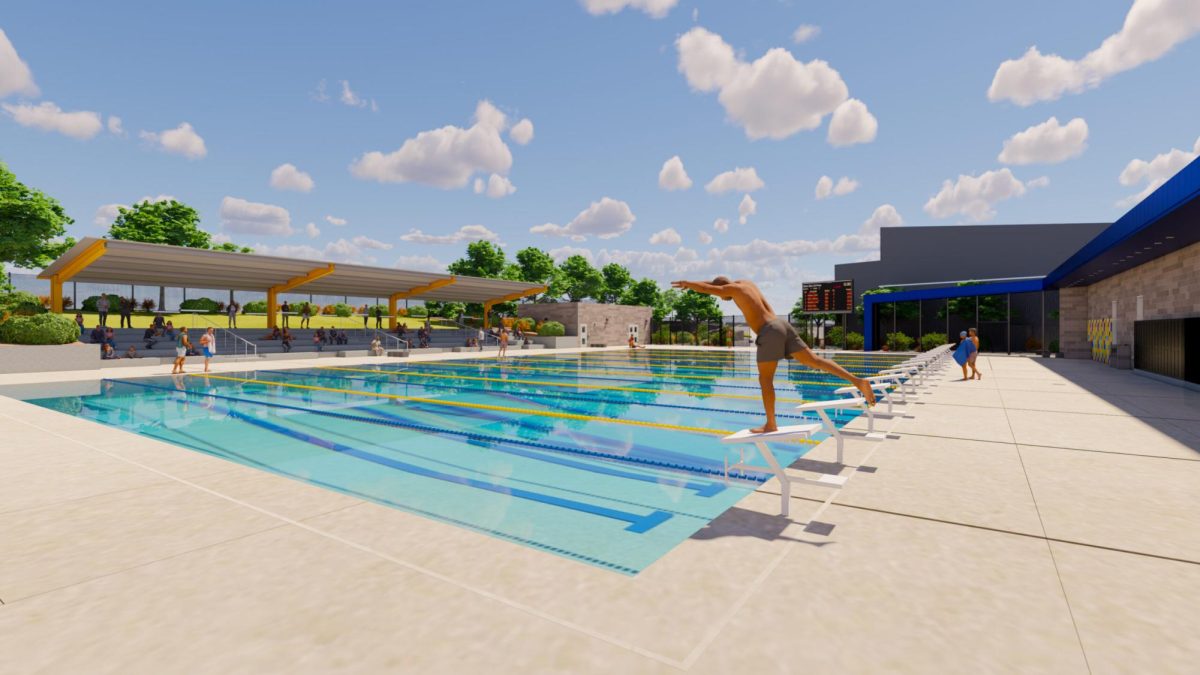
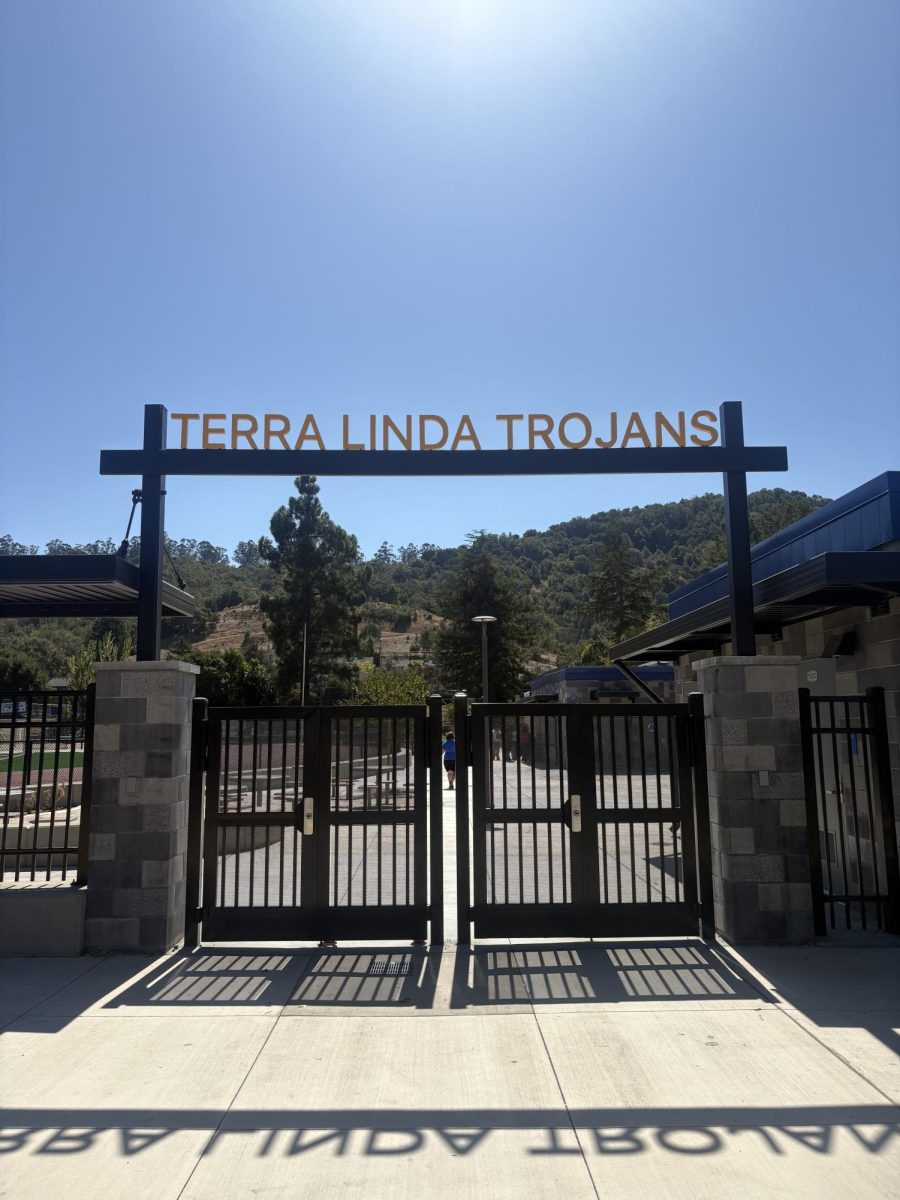



























New renovations at Terra Linda High School are being built with sustainability in mind. Included in the renovations is an array of solar panels that will completely offset TL’s energy consumption, saving money and reducing carbon emissions. In addition, many of the new on-campus buildings will feature recycled water and an emphasis on natural light sources, helping to reduce water and electricity usage, respectively.
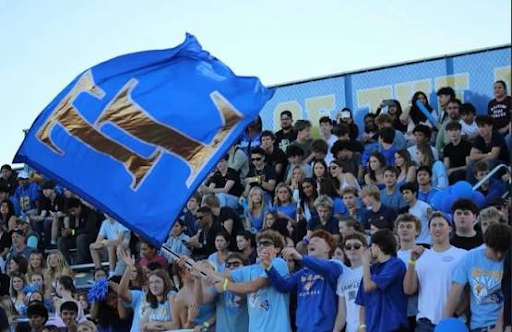
These installations aim to make TLHS more environmentally friendly. The school is also taking numerous smaller measures towards sustainability across campus as well. For example, Terra Linda’s football field—which is also used for other activities, including soccer, cheerleading, and physical education classes—is artificial turf. This helps to save water and prevent harmful impacts from any chemicals or pesticides used to maintain a grass field.
The campus also accommodates sustainable efforts by students, parents, and staff. Many parking spaces in school lots are specifically reserved for electric vehicles. There are bike racks around campus, and several more are expected to be part of the current campus renovations.
However, TL’s environmental sustainability efforts have not been without challenges. Karen Madden, head of the Marin School of Environmental Leadership (MarinSEL) program at Terra Linda, noted the difficulty of getting students to comply with trash disposal measures. “We’re still trying to figure out the best ways to remind students to sort their trash properly,” Madden said. “We don’t have labeled trash receptacles in our classrooms yet so there’s a bit of confusion about…what should be thrown out where.”
This problem is not as prevalent in the outdoor campus spaces, where many of the trash receptacles have three different sections for separating garbage. A MarinSEL-led video campaign, “Check it Out, Throw it Out, Call it Out,” has also helped to reduce the problem, calling on students to be responsible with their trash.
MarinSEL’s impact on sustainability at Terra Linda goes beyond their trash cleanup campaign. “The MarinSEL program has a profound effect on sustainability efforts on campus, and it really drives everything,” said TL principal Katy Dunlap. “Having that program really has us focus more on the environment than we probably would.”
Specifically, MarinSEL students participate in Leadership and Environmental Action Development—or LEAD—projects in which they work to “address pressing environmental issues…and lead real change in their communities,” according to the MarinSEL website. Many LEAD projects have focused on TL-specific issues. For example, MarinSEL students previously planted native, drought-tolerant plants in a planter box on Terra Linda High’s campus. These native plants support the Marin ecosystem, attracting native pollinators and birds and reducing water usage. In this way, the program has influenced campus sustainability.
But this influence goes both ways, as the Marin School of Environmental Leadership has also adjusted and responded to existing sustainability at TL. This year, a MarinSEL student project aimed at raising awareness about sustainable building at school. The students went on a walkthrough of the new buildings with Principal Dunlap and spoke to the Senior Director of Strategic Facility Planning, Tim Ryan.
Beyond campus, many sustainability efforts at Terra Linda are done at the district level, through San Rafael City Schools (SRCS) policies and regulations with which TLHS must comply. The board policy Energy and Management (BP 3511) presents the district goal of minimizing the use of natural resources, including water and energy. The administrative regulation Evaluating Existing Buildings (AR 7111) mandates energy audits of school structures to estimate projected energy savings after building improvements.
Moving forward, Terra Linda will be completely covered by the new solar panels, and the new renovations will feature numerous environmentally-friendly measures. At the student level, Madden believes that the setting of TL—its outdoor spaces on campus and the surrounding greenery—will inspire high schoolers to take a more active role in environmental efforts. “I’m very hopeful that, as students are around and they see the beautiful environment that they’re in, that they will be more motivated to keep it clean,” Madden said.