


















High school has traditionally served as a place to prepare students for higher education or a career path. But the rise of artificial intelligence has changed the landscape of college as well as the availability of various careers. This has complicated how students ready themselves for life after high school. Schools around the world have begun to change their expectations, teaching methods, and structures in order to prepare students for success in an increasingly AI-dominated world.
The primary concern that most people have about AI is that it will replace jobs. This fear has already become a reality for some working people; according to CNBC, AI was the cause of 55,000 layoffs in the United States in 2025. Because of these changes in the workforce, college students have had to change the way they think about their future. Many college students are now focused on picking a major that can lead to an AI-proof career, something that has become increasingly difficult to predict with the rapidly changing world of AI.
Previously, STEM majors were viewed as a more direct path to a reliable career compared to liberal arts degrees. But now, according to Laura Pretl, Terra Linda High School College and Career Advisor, AI has pushed many students to pursue majors in the humanities and social sciences. “The jobs in [liberal arts] fields require critical thinking, emotional intelligence, the ability to analyze complex material and make sense of it and use human judgment,” Pretl said. “Those are the jobs that are going to be safer.”
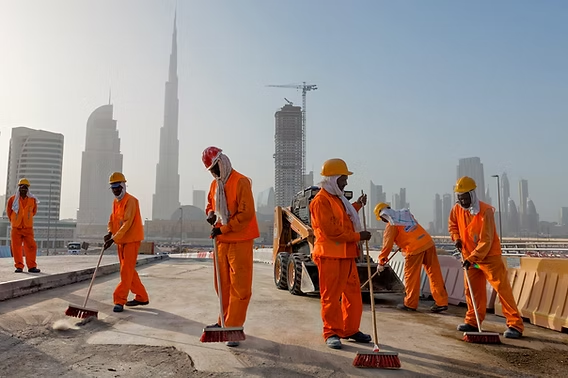
But still, many people, especially early-career workers, are struggling to find jobs. Others have attempted to enter a new career field altogether in the hopes that they will avoid losing their job to AI. For high schoolers planning to enter the workforce or a career-technical school immediately after graduation, Pretl pointed out that the trades will not be heavily affected by artificial intelligence. “Electricians, welders, construction,” Pretl said, “they have a very bright future because AI can’t do those kinds of jobs.”
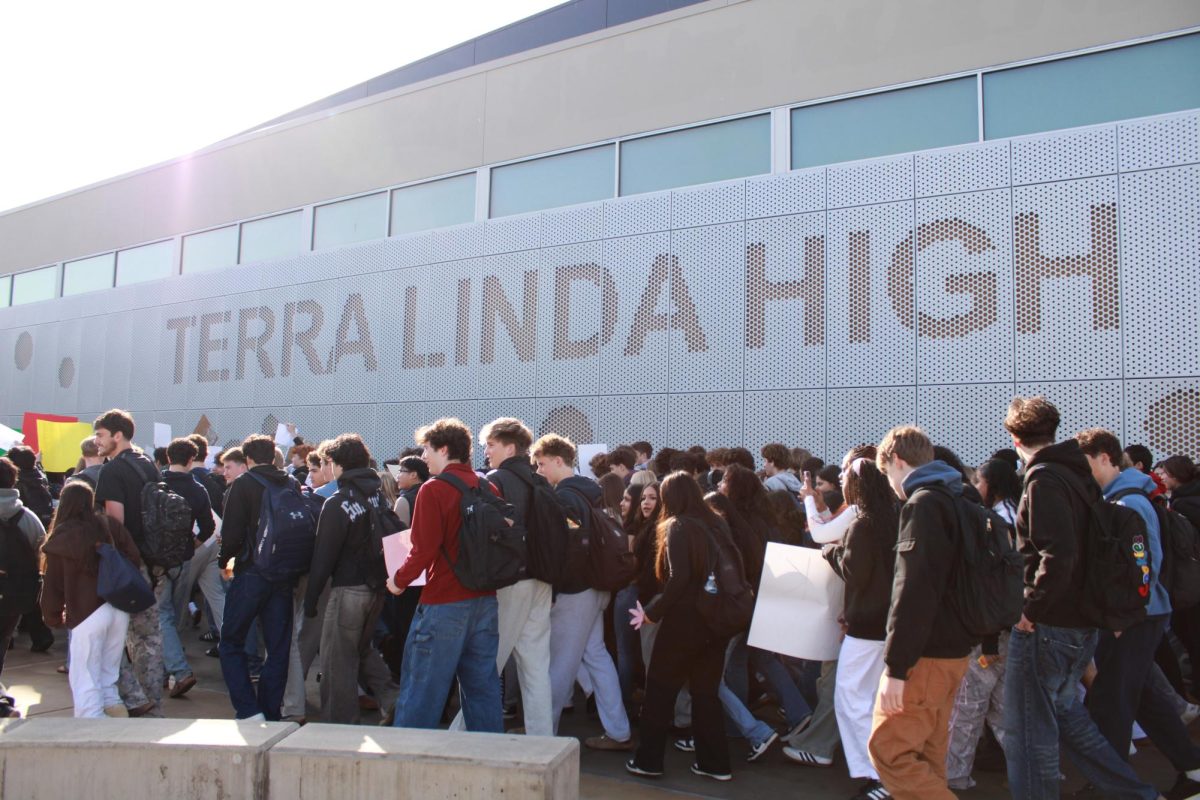
Terra Linda High School’s College and Career Center (CCC), a specific school department dedicated to preparing students for life after high school, has not shifted its practices so far in response to AI, according to Pretl. However, advisors in the CCC have been encouraging students to consider what their future will look like in the increasingly AI-centric world.
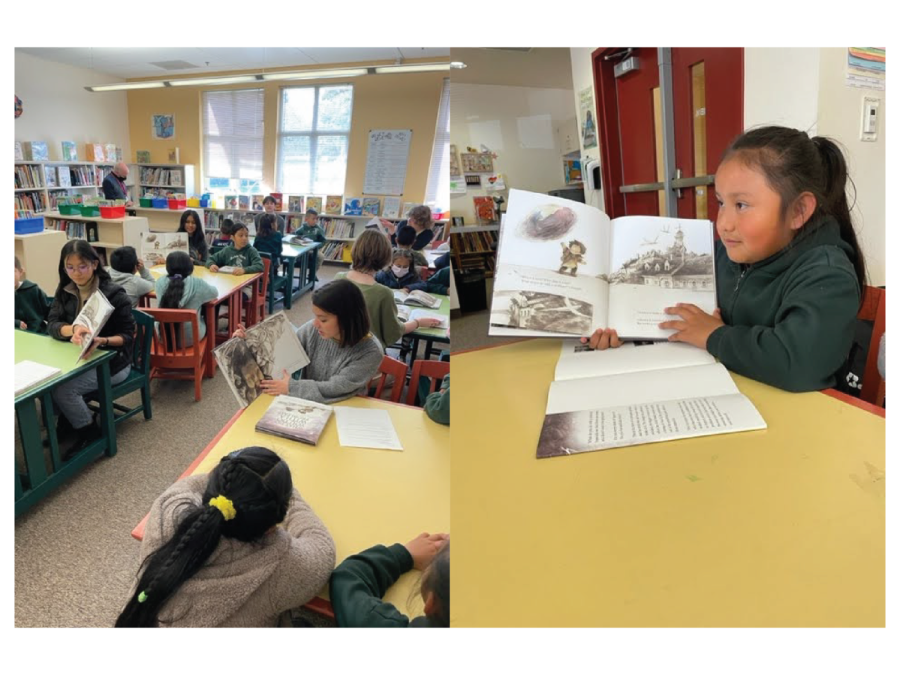
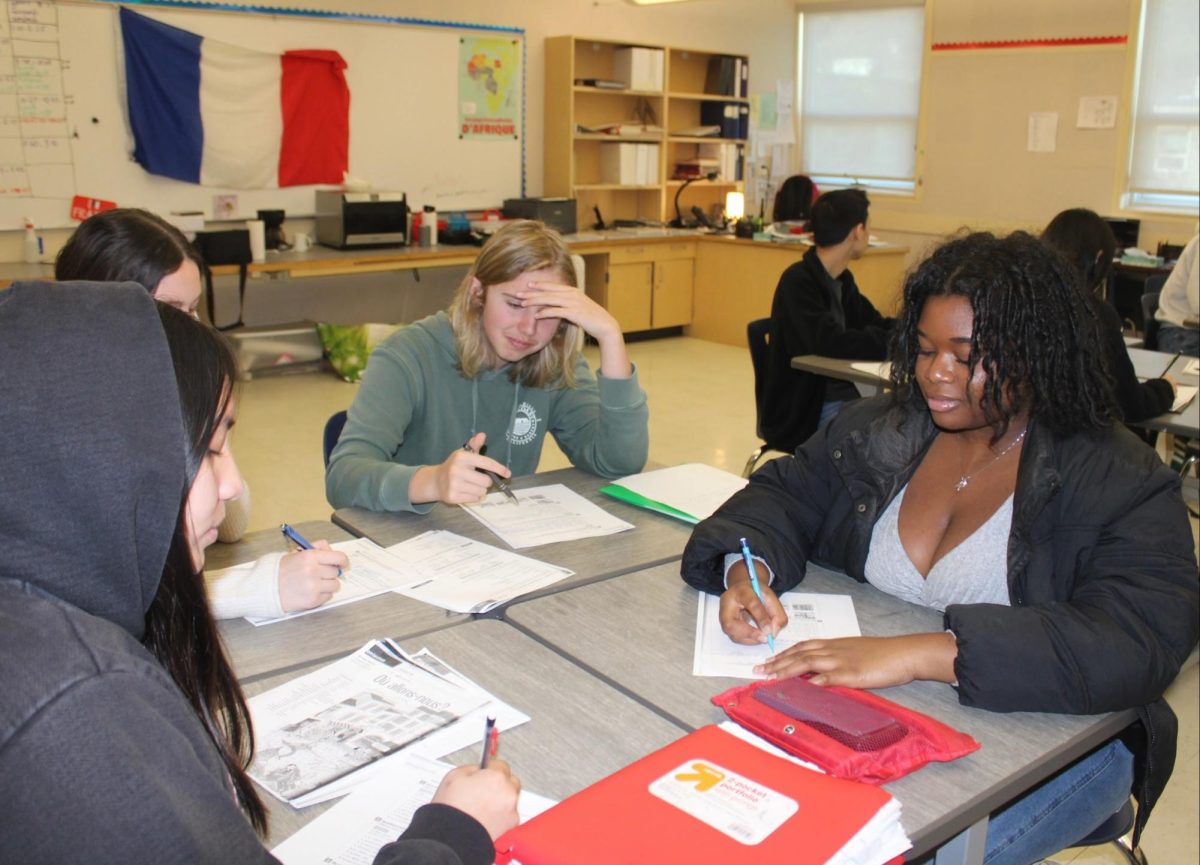
Beyond efforts from the CCC, many individual teachers are also trying to prepare their students for life after high school by prioritizing the development of lifelong skills that are unable to be replicated by AI. “Being able to figure out for yourself what something actually says or means, being able to problem-solve, being able to work with others,” English 10 and AP English Literature teacher Mackenzie Bedford said. “I try personally to make it clear to [students] that AI can’t do that for them, that they still need to know those skills.”
But despite efforts from the CCC and teachers, many TL students do not feel ready to enter a world dominated by the technology. Students nationwide have similarly expressed feeling unprepared to face AI in college and careers. According to a student survey from the Digital Education Council, “58% [of surveyed students] reported that they do not feel that they had sufficient AI knowledge and skills, and 48% do not feel adequately prepared for an AI-enabled workplace.”
Much of this feeling of unpreparedness stems from uncertainty. Most high schoolers do not know what awaits them in college and the workforce. And while this has been true for generations, the difference now is that traditional college majors and some traditional jobs now feel as if they could simply disappear in an instant because of the constant innovation and evolution in the field of AI. There has never been a definitive answer as to what the future will look like for a high schooler on the cusp of graduation. But now, the future feels more precarious than ever.
Both Pretl and Bedford emphasized that there has not been a change in the skills that students need to be prepared for the future; the difference is that students need to consider these skills, as well as their college and career prospects, in the context of AI.