
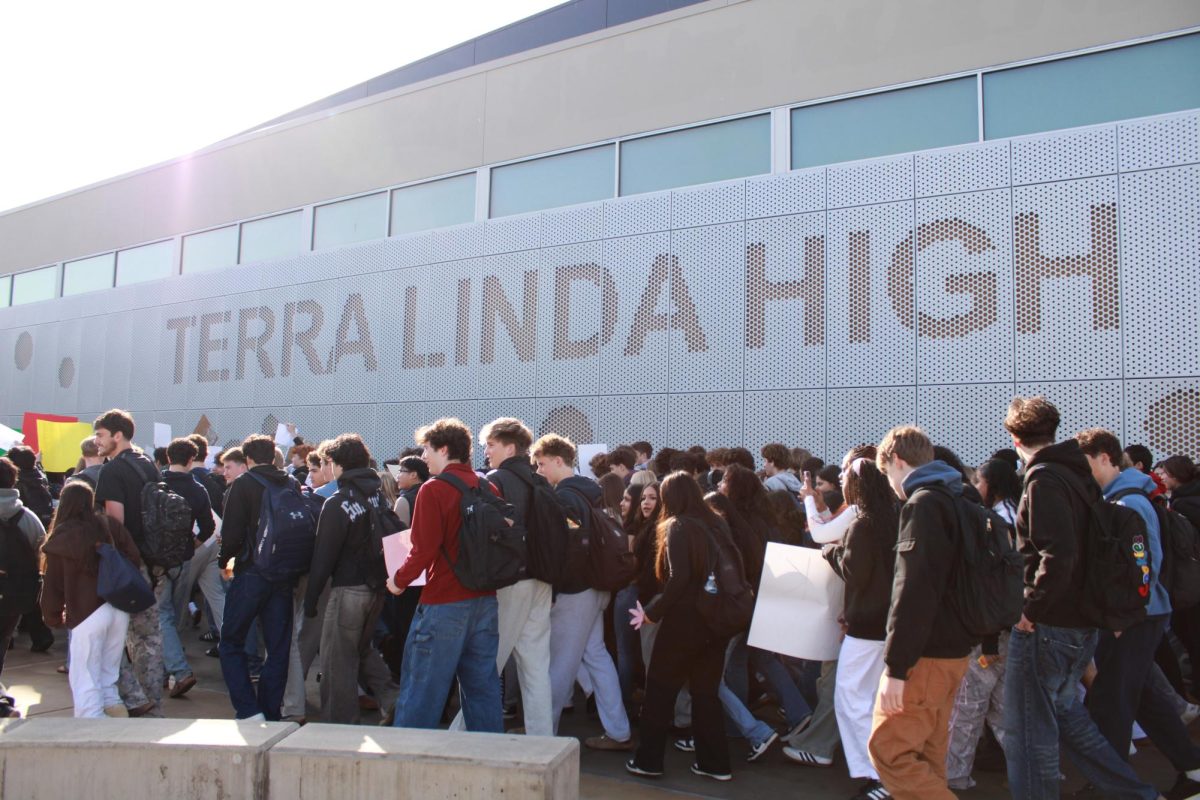























On October 18, 2025, nearly 7 million American citizens gathered together to protest against the actions of the Trump administration. Chants like ‘no kings, no masters’ echoed across the country, intending to promote democracy, free speech, and limits on presidential power.
The turnout for the march was nearly 50% larger than that of its predecessor held on Trump’s birthday, demonstrating an increase in concern among American citizens.
It was organized by a coalition of progressive and civil liberties groups, including the Indivisible Project, the American Civil Liberties Union (or ACLU), and the 50501 Movement. Labor unions such as the American Federation of Teachers and the Communications Workers of America were also involved, as were the organizations Public Citizen, MoveOn, and Vote Save America. Some of these unions have organized rallies in the past, such as the “No Kings” rally earlier this year. These groups scattered messages and posts across social media, establishing October 18th as the rally date.
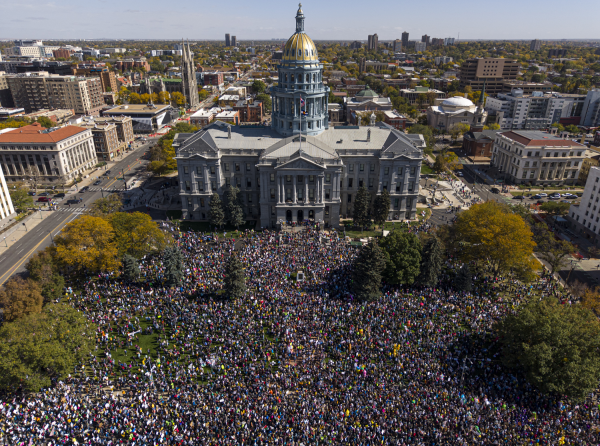
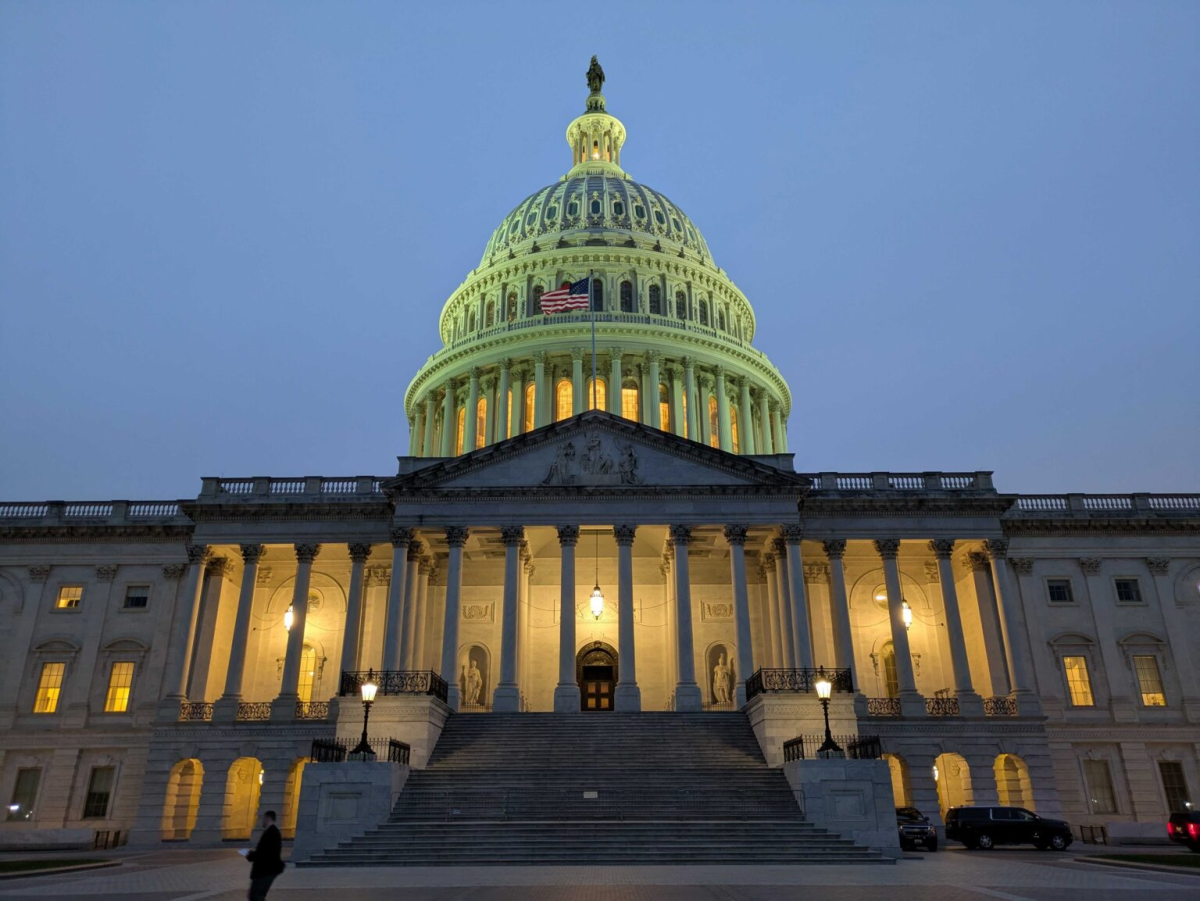
Participants in the rally held up signs displaying messages such as“Evil Wins When Good People Do Nothing,” “Cleanup on Aisle 47 (referring to the 47th presidential term being held by Trump),” and “Elect a Clown, Expect a Circus.” Some even wore costumes, such as colonial or yellow-themed outfits. The color was dubbed “Resistance Yellow” to represent unity and defiance. Many rallies featured live music, activist speeches, and chants like “The people united will never be defeated” and “No kings, just votes.” Notable speakers, including Senators Bernie Sanders and Chris Murphy, appeared at select locations, addressing crowds in places like Washington, D.C.
Ame Sagiv, a TL parent and participant in the “No Kings” rallies, shares her thoughts on the purpose of the assembly. “Some people question whether there is any point in protesting, like whether it has any impact on politics or on our lives.” Sagiv says. “However, making our voices heard is critical now more than ever. Voicing strongly to our representatives our opposition to what’s happening in this country is imperative. Silence equals assent.”
Barbara Narazi, another avid rally-goer, provides her motivation for attending both of the “No Kings” protests. “I love this country, and I’m honestly heartbroken to see its freedoms being destroyed by a ruthless, self-serving regime,” she shares. “It was heartening to see such a large multi-generational, peaceful group of people exercising their right to freely express dissent, and it gave me hope for a brighter time to come.”
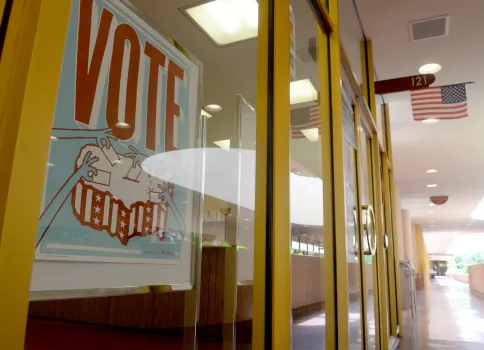
The “No Kings” rally aimed to deliver three primary messages: opposition to dictatorship and the dismantling of checks and balances, defense of constitutional rights, and encouragement of democratic participation, including voter registration and civic education. Other influences included the recent immigration enforcement, the deconstruction of multiple bureaus, such as the Department of Education, and the Trump administration’s influence from billionaire donors.
This rally is considered to be one of the largest coordinated protests in U.S. history. Many reporters and news outlets praised the demonstration, speaking of its peaceful nature and high energy.
Some organizers continue to make post-rally efforts, such as community events like food drives and voter outreach initiatives in Arizona and Tennessee, to support those in need or undereducated citizens. Others continued to pressure local and federal officials through town halls and campaigns.
The “No Kings” rally exemplifies the public’s will to oppose oppression and defend the principles of democracy, as shown by the participation and the peaceful nature of the protest. In the eyes of protesters, the rallies don’t just represent rebellion, but a demonstration of the courage citizens have to speak up against those in power, which may lead to further action being taken. This significance marks an important moment in history, one of triumph, leadership, and justice.