

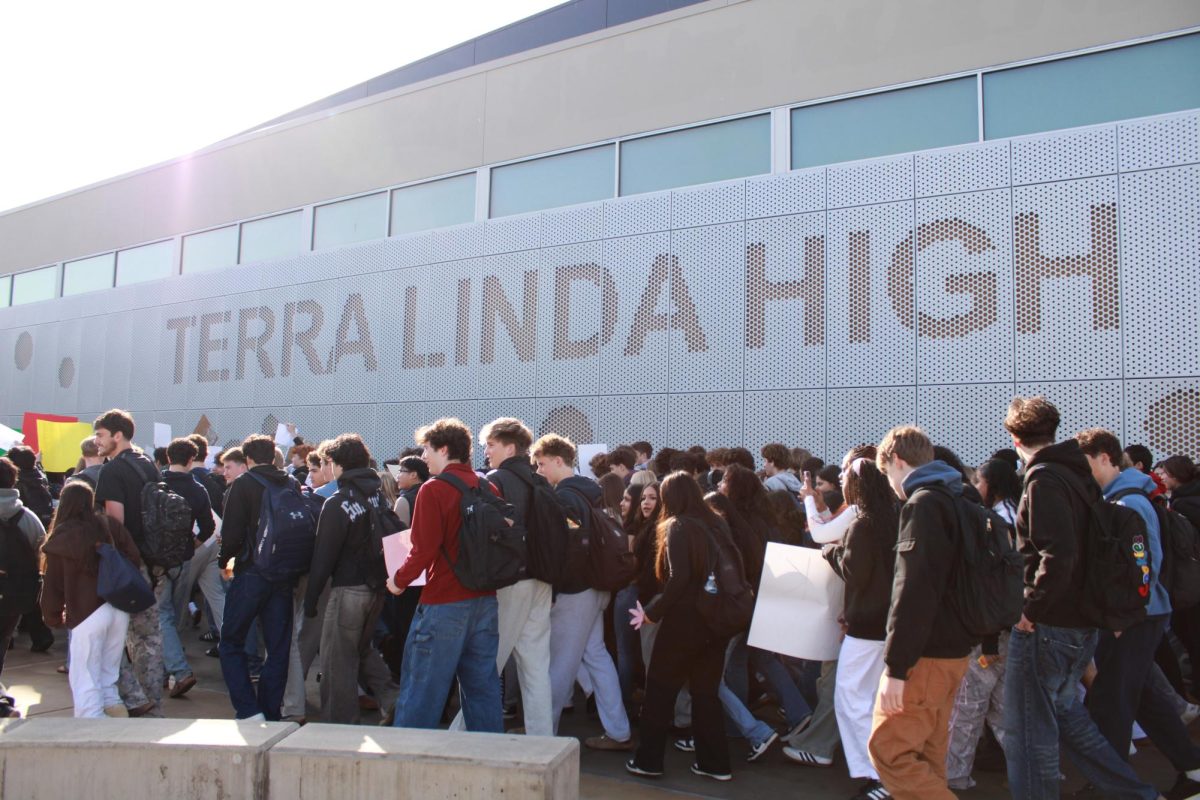













































Since his inauguration in January 2025, President Donald J. Trump has passed countless executive orders. From restoring TikTok to America’s screens to raising tariff rates in countries around the world, Trump’s executive orders have branches in practically every aspect of American’s lives. However, Terra Linda High School students may be particularly impacted by a specific set of the White House’s executive orders: the federal funding cuts to colleges and universities around the United States.
Harvard University, one of the most well-renowned colleges in the world, was stripped of two billion dollars in funding for research and grants in April 2025. It was not the only one, as most of the Ivy Leagues and other prestigious schools were targeted. However, Harvard was one of the most resistant.
The Trump administration claimed the university failed to properly address antisemitism on campus. The cuts themselves also followed Harvard’s refusal to cooperate with the administration’s demands to remove Diversity, Equality, and Inclusivity (DEI) programs. DEI programs aim to diversify the range of curriculum, allocate resources to those with disabilities, and offer opportunities to those of all backgrounds. The current United States administration describes this program as harmful. Eliminating DEI is part of, “President Trump’s ongoing commitment to end illegal discrimination and wasteful spending across the federal government,” according to a press release by the U.S Department of Education. The administration claims that DEI does the opposite of what it claims, dividing students instead of bringing them together. This long, ongoing debate between Trump and Harvard was settled by a judge, who decreed the freezing of the college’s funding unlawful. However, with the current government shutdown, it is unclear whether or not the administration will return the funds.
Locally, UCSF (University of California, San Francisco) has been significantly impacted by the first round of federal funding cuts. In 2024, prior to the implementation of funding cuts, UCSF received almost $815 million from the National Institutes of Health, a government funded organization. They were one of the top federally funded universities through NIH, only surpassed by Johns Hopkins University. Thus, the cuts have significantly reduced the amount of funding the university has received, terminating some grants altogether.
UCSF Professor of Medicine, Neeta Thakur, has personally had four of her grants terminated. One grant was awarded by the Environmental Protection Agency on the health impact of wildfire smoke across California, while the other three were diversity supplements that supported scientists from historically underrepresented groups. In total, Thakur had around $1.2 million of her funding cut. When she first got notice about her grants, Thakur didn’t receive much information. “We were just sent a letter stating that our grants were terminated because they did not align with the priorities of the federal government,” Thakur shared. “Other than that, we weren’t given much information.” Since the termination of these grants, Thakur has fought back in major ways. “When we received termination notices, it was very isolating. The experience made you sort of doubt yourself and the importance of your work. It motivated me,” commented Thakur. She has since taken part in a class action lawsuit against the “unlawful termination” of these grants. Through this process, a large portion of NIH and NSF grants at both UCSF and UCLA have been reinstated. Although the class action lawsuit resulted in reinstatement of these grants, the disruption to many scientists and their teams has been significant. “We’ve had to pause some of our research activities, and have also had to undergo some staffing changes,” shared Thakur. “It’s definitely been really hard and challenging to just be able to restart with the reinstatement of the grants.” Beyond UCSF, other universities and scientists have been impacted by these executive orders. Fear of termination has caused many to put in place stricter restrictions on what can be said. A Stanford physician scientist shared “…we cannot say as much as we used to.”
Currently, the Trump administration is not just stripping federal funding to terminate certain college programs. They are also making efforts to popularize conservative ideologies in schools, through the incentive of more federal funding. Known as a “Compact for Academic Excellence in Higher Education”, this offer has been extended to nine schools, including MIT, Vanderbilt, Brown, and the University of Southern California. If universities comply, they are more likely to be able to access federal funding in the future. The plan proposes increased funding in exchange for several changes, such as limiting international student enrollment, eliminating criticism of conservatives, freezing tuition for five years, and adopting a definition of gender based on reproductive function. It has not been publicly shared whether any colleges have agreed.
But how do these federal decisions affect us? For Terra Linda students, the effect on their future may be significant. Students of color or female/transgender students’ college application process may look different, with many universities no longer considering race or gender a significant factor in an application. Additionally, those hoping to go into STEM or education will be impacted, whether that is through having limited access to labs, changing their policies, or having a less diverse staff. Coral Billisi, a senior on the path towards neuroscience, shared “I think [my future’s] going to be severely impacted, especially if I want to get a lab internship once I’m in med school or in college.” Without as much funding accessible to the universities, there may not be as many labs open for students to find work at. Billisi also interns as a lab assistant at the Buck Institute for Research on Aging, an independent and nonprofit research center focused on aging and age-related diseases. “Right now, Buck researches Alzheimer’s and memory. And they’re close to breakthroughs,” Billisi shares. “If that funding gets cut, they’re not going to find answers. They’re not going to be able to do anything.” If the pattern of funding cuts continue, the world of medical and research discoveries and innovations may struggle. Without as much money to fund research, breakthroughs will be limited, slowing down many universities’ progress. Billisi concludes, “I think if they keep cutting funding to all these medical research institutes, they’re not going to exist anymore, or at least not at the same scale. That’s going to make it a lot harder to get into the field and also a lot harder to succeed in it if you don’t have the resources to actually do research.”
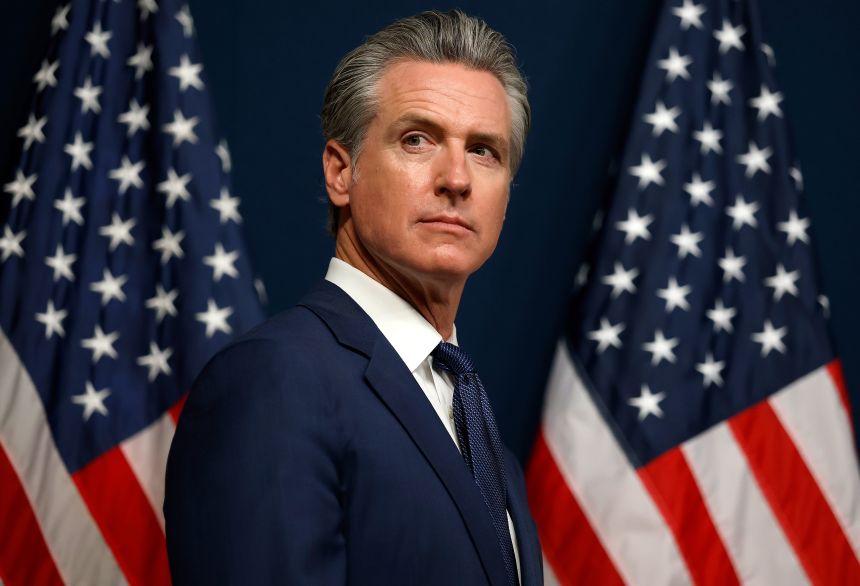
The Trump administration’s impact on higher education has been severe nationwide. Seeing such changes on the news may seem surreal. However, these changes could potentially affect everyone on the Terra Linda campus. California Governor Gavin Newsom has threatened to cut USC’s funding if the college complies with Trump’s offer, and has been an active advocate against the administration’s policies in the state. Still, UCSF was significantly affected, as was UCLA. All in all, there doesn’t seem to be an end in sight to the U.S. government’s fixation on higher education. What the future holds is unclear to all.